Guides / Industry Guides
LED displays for temples, monasteries and religious events
7 min read · Updated October 2026
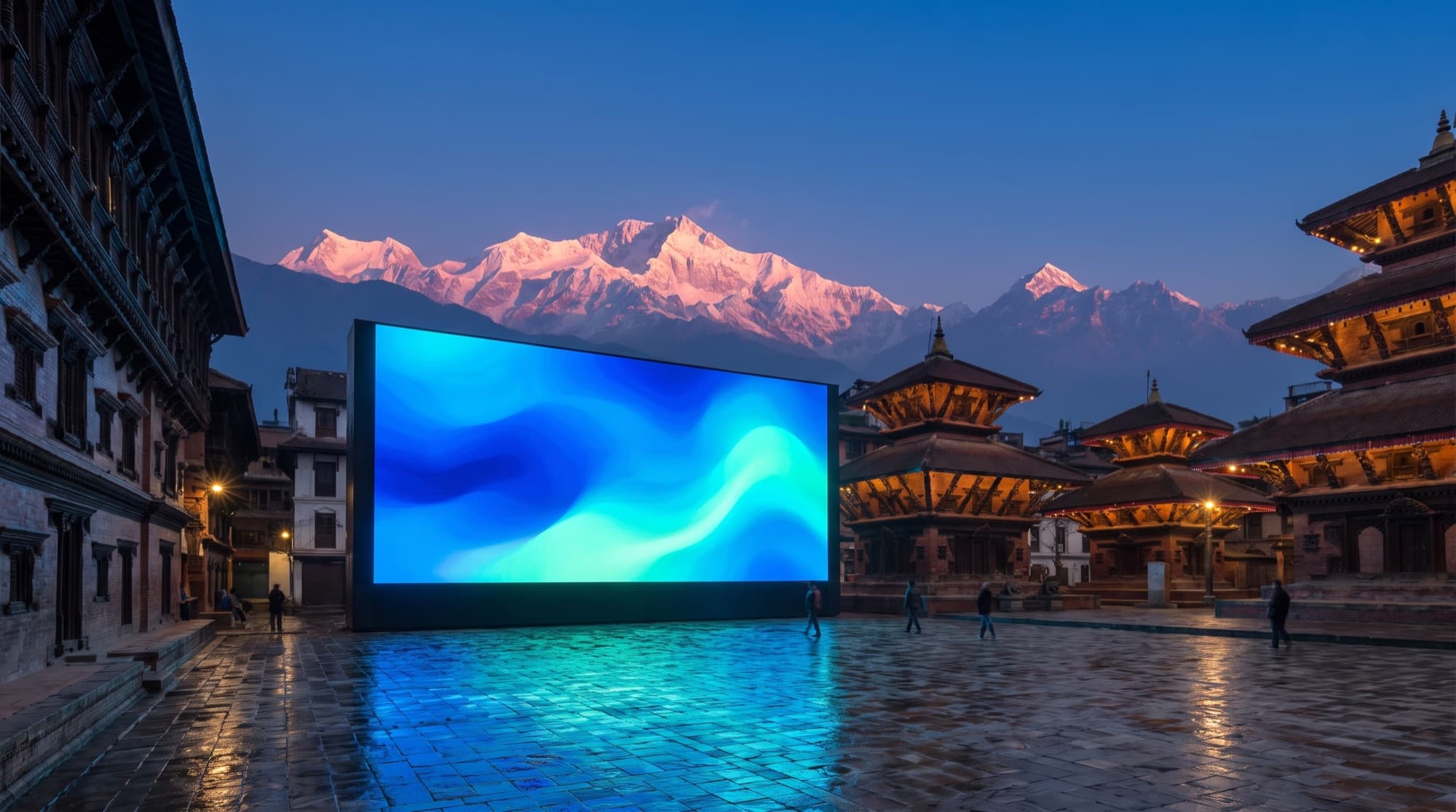
A temple or monastery LED screen does one job well: it lets people who cannot get close to the shrine, the stage or the teacher see and follow what is happening. For a once-a-year festival, rent an outdoor screen; for a site with weekly gatherings, daily notices or regular live relays, a permanent outdoor screen of P4–P8 pitch with front-and-rear IP65 sealing usually makes more sense. The hard parts are rarely the screen itself — they are heritage sensitivities, smoke and soot from lamps and incense, temporary power, and keeping a crowd moving safely.
What do temples and monasteries actually use LED screens for?
Most religious sites in Nepal use a screen for three things: relaying a ritual or discourse to people outside the main hall, showing schedules and notices, and keeping large festival crowds informed. The relay is the reason most committees first ask about a screen — a courtyard can hold far more people than can see the shrine or the seat of a visiting teacher.
At monasteries, the common case is a teaching or empowerment where the hall fills and the overflow sits outside; a camera feeds the screen so everyone can follow. At temples, it is the major festival days, when queues stretch well beyond the gate and devotees wait for hours with no view of the shrine.
Others want a permanent information board for darshan and puja timings, festival dates and safety notices — a smaller, always-on, remotely managed screen, closer to a public information board than an event screen.
Should you rent or install a permanent screen?
If the screen is needed for one or two festivals a year, rent; if it will be used every week or carry daily notices, a permanent installation usually pays back in convenience and reliability. Rental gives you a large, bright, professionally rigged screen for the days that matter, with an operator on site, and nothing to maintain for the rest of the year.
A permanent screen makes sense where gatherings are regular — weekly bhajan or puja evenings, monthly teachings, a pilgrimage site with steady footfall — or where the committee wants a notice board that works every day. It also removes the scramble for rental stock in Dashain and Tihar, when every event in the valley wants a screen at once. Some sites do both: a modest permanent screen, plus rented screens for the largest festival days.
What specification suits a temple courtyard or monastery yard?
For an open courtyard or yard, a P4–P6 outdoor screen of 5,000 nits or more, sealed to IP65 front and rear, is the usual starting point. As a rule of thumb, pixel pitch in millimetres roughly equals the closest comfortable viewing distance in metres, so a crowd standing six to fifteen metres away reads a P5 or P6 screen comfortably.
Brightness matters because most festival events run through the day, often under strong sun at altitude. A screen that looks fine at dusk will wash out at noon, so specify for daylight and let the controller dim it automatically in the evening. Front-and-rear IP65 is not optional: festivals often coincide with the monsoon or its edges, and a front-only rating lets water in through the back of the cabinet.
Inside a hall — a monastery’s assembly hall, for example — an indoor screen of P2.5–P3 at much lower brightness is the right choice. An outdoor-brightness screen indoors is uncomfortable to look at and wastes power.
Heritage sites, smoke and soot — the Nepal-specific problems
On a heritage site, the screen must not touch, drill into or visually dominate the monument; a free-standing frame or ground stack placed with the committee’s agreement is the normal answer. Many of Nepal’s temple squares sit inside protected zones where requirements vary and change, so check with the heritage authority, the municipality and the ward office before committing to any permanent structure.
Butter lamps, diyas and incense produce fine soot and smoke that settle on screen faces and get drawn into cabinet vents. Place the screen away from lamp racks and fire offerings, keep air paths clear, and plan regular dry cleaning of the face. A front-service cabinet makes this easier, because modules can be removed and cleaned without access behind the screen.
Earthquake safety also applies. Any permanent structure in a courtyard where people gather must be engineered, anchored and inspected — a screen falling into a crowd is the scenario every committee must design out.
Power, cameras and content on festival days
Plan power before anything else: a large festival screen needs a dedicated, stable supply, and in most cases a generator or protected line rather than a borrowed socket. Voltage swings are common on crowded festival days, and a screen without stabilised supply and correct earthing is at risk of damaged power supplies and receiving cards.
For a live relay, a camera operator, a simple switcher and a reliable cable run to the screen’s controller are enough. If the event is also being streamed or filmed, ask for a screen with a refresh rate of at least 3,840 Hz so it does not flicker on camera. Sound is a separate system — a screen with no audience audio frustrates people more than no screen at all.
Between relays, keep content calm and useful: timings, the order of the day, queue directions, emergency exits and lost-children points. Bright, fast-moving advertising sits poorly at a sacred site, and most committees choose to avoid it.
Crowd safety and placement
Place the screen where people can watch without blocking a path, a gate or an emergency route. A screen draws a crowd in front of it, so the area facing it must be open ground with clear exits, not a lane or the queue to the shrine.
Mount the bottom edge high enough that the front rows do not block the view for everyone behind — on open ground, usually two metres or more. Fence the base of any ground stack or truss, keep cables covered and out of walkways, and agree with volunteers and local police who manages the space in front of the screen.
The short version
- Temples and monasteries mainly use LED screens to relay rituals or teachings to overflow crowds and to show notices.
- Rent for one or two festivals a year; install permanently if gatherings or notices are weekly or daily.
- Outdoor courtyards need roughly P4–P6, 5,000+ nits and IP65 sealing front and rear.
- On heritage sites, use free-standing structures and confirm requirements with the heritage authority and ward office first.
- Keep screens away from butter lamps and incense, and plan regular cleaning of soot and dust.
- Power, earthing and crowd flow in front of the screen matter as much as the screen itself.
Common questions
What size LED screen do we need for a temple festival?
Size the screen to the distance of the furthest viewer you want to reach and the space available, not to a fixed figure. For a typical courtyard where people stand ten to thirty metres away, a screen around four to six metres wide at P5–P6 is a common choice. A site survey confirms the sightlines and where the screen can safely stand.
Can an LED screen be installed at a heritage temple in Kathmandu?
Often yes, but only as a free-standing structure that does not touch or drill into the monument, and only with the right permissions. Heritage zone requirements vary by site and change over time, so check with the heritage authority, the municipality and the ward office before committing. Rental screens on temporary frames are the simplest route for festival days.
Is it better to rent or buy an LED screen for a monastery?
Rent if the screen is needed for a few teachings or festivals a year; buy if there are regular weekly gatherings or the monastery wants a daily notice board. A permanent screen also avoids the shortage of rental stock during Dashain, Tihar and Lhosar. Many sites combine a small permanent screen with rented screens for the largest events.
Will smoke from butter lamps and incense damage an LED screen?
Soot and smoke will not destroy a screen quickly, but they settle on the face and clog cooling vents, which shortens component life and dulls the picture over time. Position the screen away from lamp racks and fire offerings, keep air paths clear and clean the face regularly with dry methods. Front-service cabinets make that cleaning much easier.
Do we need a generator for a festival LED screen?
For a large outdoor screen on a festival day, a dedicated generator or protected supply is strongly recommended. Crowded events often bring voltage swings and overloaded circuits, and a screen needs stable, earthed power to run safely all day. Plan the power with the screen supplier rather than relying on a nearby socket.
Where to go next
More in Industry Guides
Want this applied to your site?
We survey the site free, then spec the pitch, brightness and structure around what it actually needs.
Book a site survey