Guides / Industry Guides
LED displays for banks in Nepal
6 min read · Updated October 2026
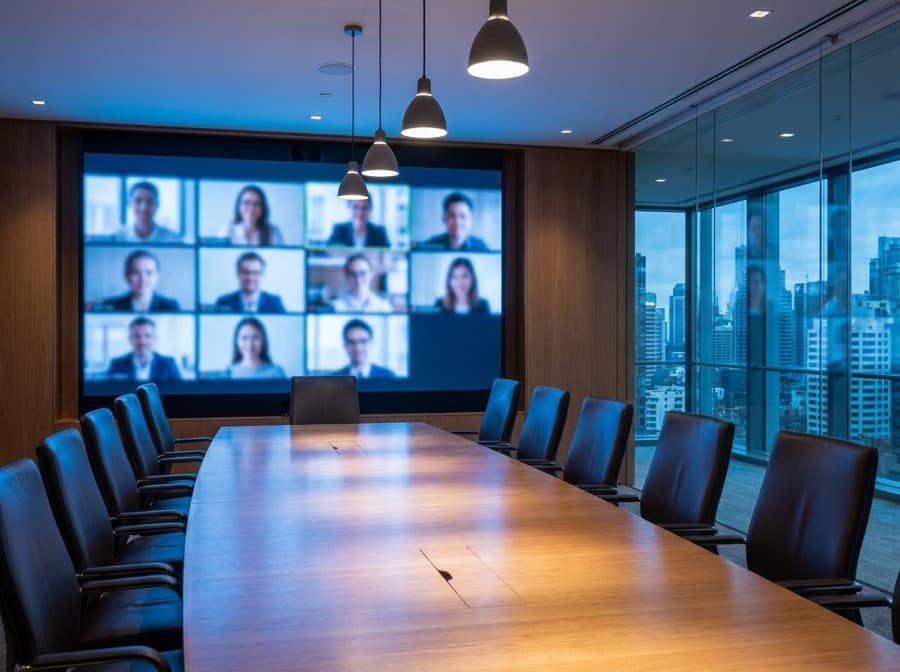
Banks in Nepal use displays at two levels: in branches, for frontage branding, interest and exchange rate boards, queue screens and promotions; and at headquarters, for boardrooms, lobbies and monitoring rooms. Branch screens should be managed centrally through a secure CMS so that every branch shows the same approved rates and messages, while headquarters screens are specified for close viewing and, in monitoring rooms, long hours at comfortable brightness. Accuracy and control of content matter more in banking than in almost any other sector.
Where do banks use LED displays and digital signage?
Banks use screens in five places: the branch frontage, the banking hall, the queue area, the ATM lobby and headquarters. Each has a different job and a different specification.
The frontage screen carries the brand and campaigns to the street, and must be outdoor-grade if it faces the weather or sits behind glass in sunlight. The banking hall carries rate boards and product information. Queue screens show token numbers and counters. ATM lobbies carry short service messages. Headquarters adds boardrooms, an executive lobby and sometimes a monitoring or operations room.
Most banks start with the branch network and add headquarters screens later, but planning both together keeps the hardware, the CMS and the support arrangements consistent.
How should interest and exchange rate boards be handled?
Rate boards should be driven from a single approved source and published centrally, not typed in branch by branch. The risk with rate boards is not the hardware; it is a wrong figure on display.
A digital rate board in a CMS can be fed by a template that the treasury or marketing team updates once, which then publishes to every branch at the same moment. Where the bank’s systems allow, the template can pull rates from an internal data feed, with a human approval step before publishing.
Display requirements for rates and charges are a matter for the bank’s own compliance team and its regulator, and they change. Confirm what must be displayed and how before designing the templates, and keep a record of what was shown and when.
Which screens suit a bank branch?
Inside a branch, LCD digital signage usually suits rate boards, queue displays and promotions, while LED suits the frontage and larger feature walls. The deciding factor is viewing distance and ambient light.
Customers read rate boards and queue numbers from a few metres away, where LCD gives sharp text at a modest entry point. A frontage screen facing the street needs outdoor brightness — 5,000 nits or more — and IP65 sealing front and rear if it is exposed to rain. Behind shop glass in direct sun, it should still be treated as outdoor for brightness.
Design for consistency across branches. Using the same screen models and mounting details everywhere makes the content templates predictable and makes spares interchangeable, which matters when branches stretch from the valley to the Terai and the hills.
How do you manage screens across a branch network securely?
Manage branch screens through a central cloud CMS with role-based access, locked-down players and a defined approval workflow. In banking, who can change what is as important as what is shown.
Give branch staff permission to update only local notices, if anything, and reserve rates and campaigns for head-office roles. Players should be locked so they cannot be used to browse, plug in a USB stick or play unapproved content. Coordinate with the bank’s IT security team on network segregation, so the signage network does not become a path into core systems.
We have built a networked CMS with scheduled playback for a multi-branch retail chain in Kathmandu; the same principles — central scheduling, remote monitoring and strict permissions — apply with even more force in a bank.
What should a bank headquarters specify for boardrooms and monitoring rooms?
Headquarters boardrooms and monitoring rooms are usually best served by fine-pitch LED, specified for close viewing, comfortable brightness and long operating hours. These rooms are where a seamless image and readable detail matter most.
In a boardroom, a seamless fine-pitch wall avoids bezels cutting through a video call participant or a slide, and wireless presentation lets directors share from their own devices. In a monitoring room, operators look at dashboards for hours, so brightness should be deliberately low — around 600 nits is typical for control rooms — and COB technology is worth considering for its robust surface.
Nepal’s first COB LED installation, in 2024, was a P1.5 control room for a corporate client in Kathmandu: 4×2 m, 600 nits and 3,840 Hz. It shows what a modern monitoring wall in the valley looks like.
What should banks include in an LED display tender?
A bank tender should specify performance and support, not just panel size: pitch, brightness, IP rating front and rear, refresh rate, CMS security features, warranty and local spares. Leaving support vague invites the lowest bid with the weakest service.
Ask for manufacturer authorisation, CE and RoHS certificates and work completion certificates from comparable projects. For a branch roll-out, ask how the supplier will install and maintain screens outside the valley, and how quickly a failed unit can be replaced.
Our LED displays carry a two-year manufacturer warranty honoured locally with spares held in Kathmandu, and all installation is done by our own team. We are glad to survey a pilot branch free of charge before a wider roll-out is specified.
The short version
- Banks need screens in branches and at headquarters, each with different specifications.
- Rate boards should be published centrally from one approved source, never typed per branch.
- Rate display requirements are set by the bank’s compliance team and regulator.
- Branch signage needs role-based CMS access, locked players and network segregation.
- HQ monitoring rooms suit fine-pitch or COB LED at around 600 nits.
- Standardise screen models across branches so templates and spares are interchangeable.
Common questions
What kind of display is best for showing interest rates in a bank?
An LCD digital signage screen managed through a central CMS is usually best inside the banking hall, because customers read it from close range. The important part is the content system: rates should be published centrally from one approved source to every branch.
Can a bank update all branch screens from head office?
Yes. A cloud CMS lets head office schedule and publish rates, campaigns and notices to every branch at once, with monitoring that shows which screens are online. Branch staff can be limited to local notices or given no editing rights at all.
Is digital signage secure enough for a bank network?
It can be, if it is designed for it. Use locked-down players, role-based CMS permissions and an approval workflow, and work with the bank’s IT security team so the signage network is segregated from core banking systems.
Which LED screen is best for a bank boardroom in Kathmandu?
A seamless fine-pitch indoor LED wall with wireless presentation suits most bank boardrooms, because it avoids bezels through faces and slides. The pitch should match the distance from the table to the wall.
Does a bank branch frontage screen need to be outdoor-rated?
If it is exposed to rain, it needs IP65 sealing front and rear and outdoor brightness of 5,000 nits or more. Even behind glass, a screen in direct sun should be specified with outdoor brightness to stay readable.
What warranty should a bank expect on LED displays in Nepal?
Look for a manufacturer warranty honoured locally with spares held in Nepal. Our LED displays carry a two-year manufacturer warranty, with spares in Kathmandu and installation by our own team.
Where to go next
More in Industry Guides
Want this applied to your site?
We survey the site free, then spec the pitch, brightness and structure around what it actually needs.
Book a site survey