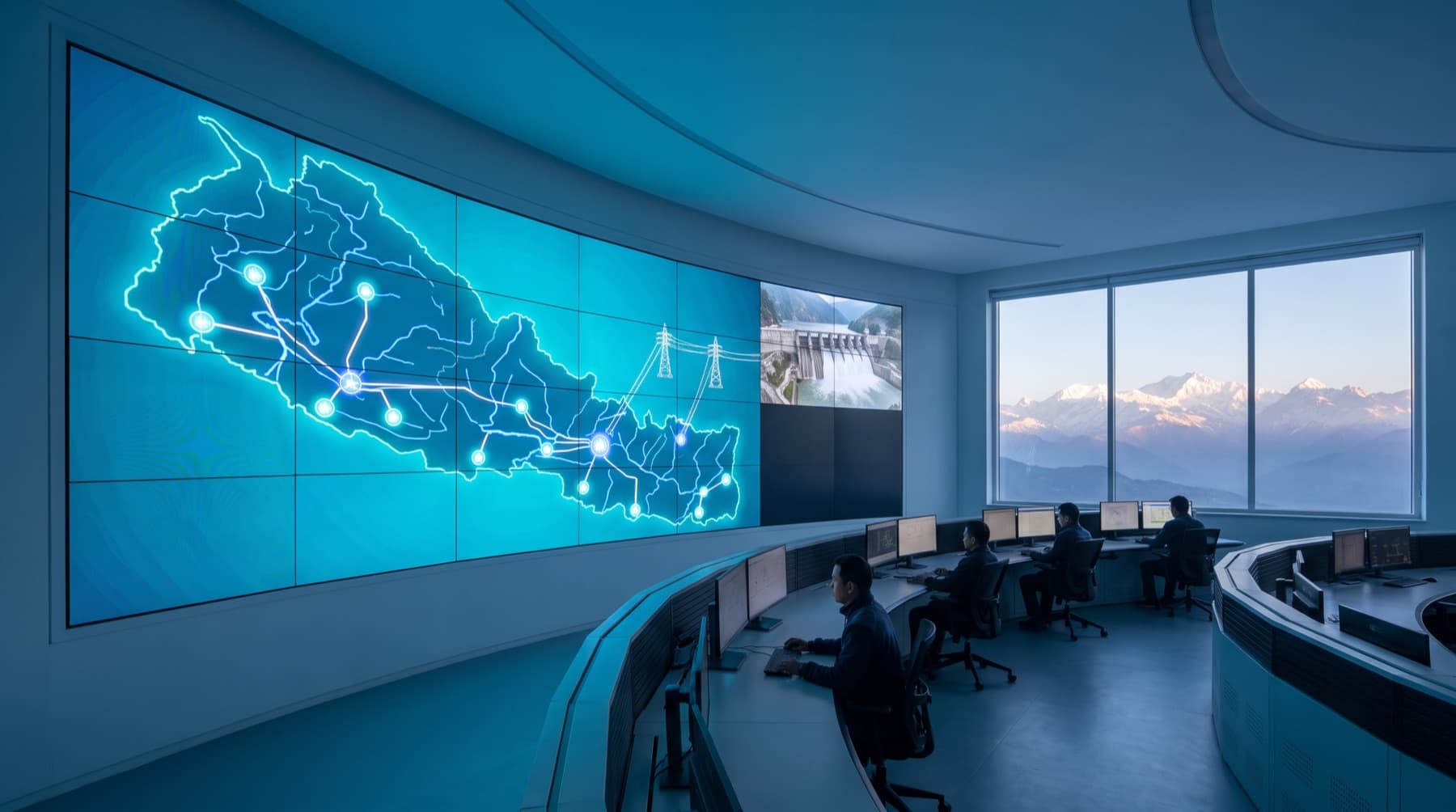
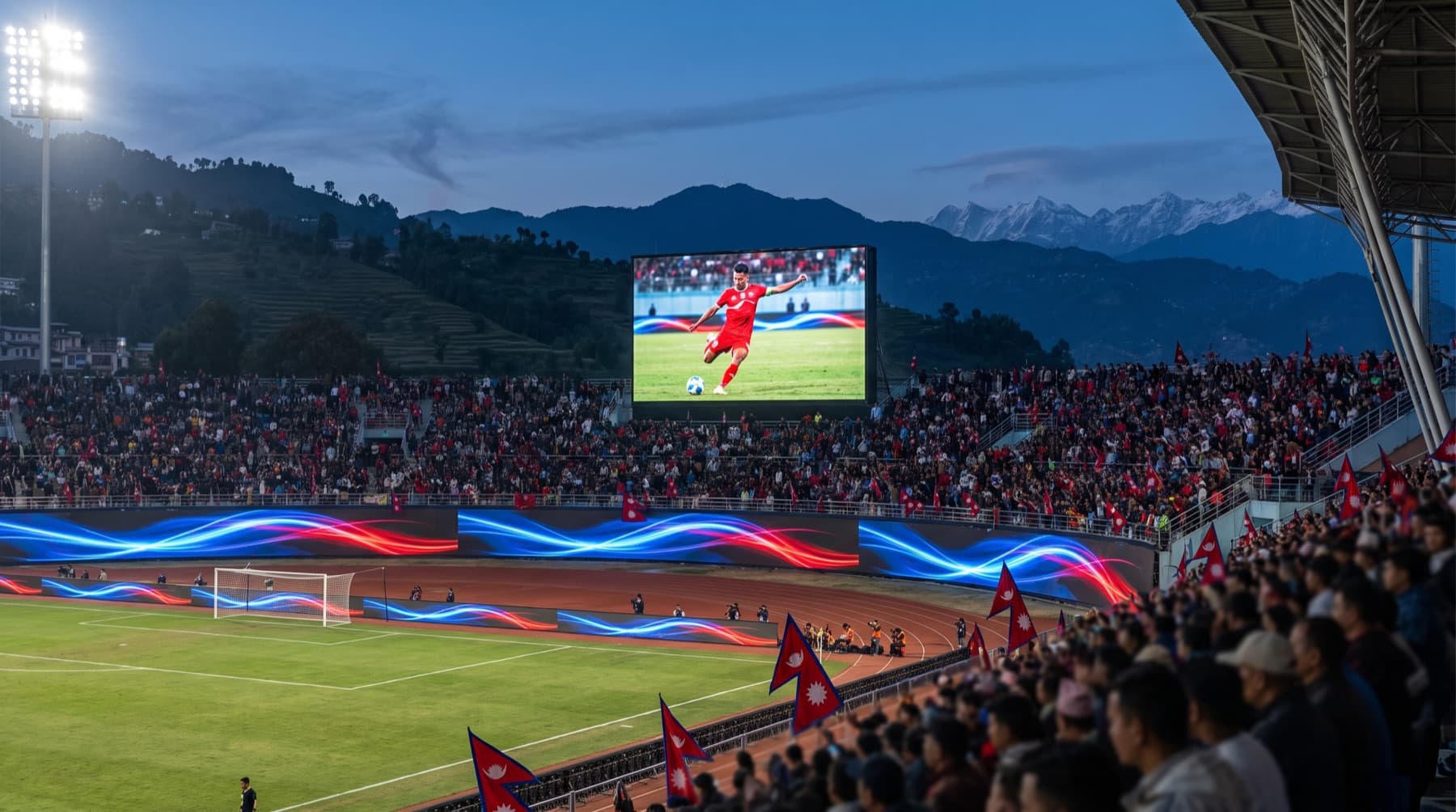
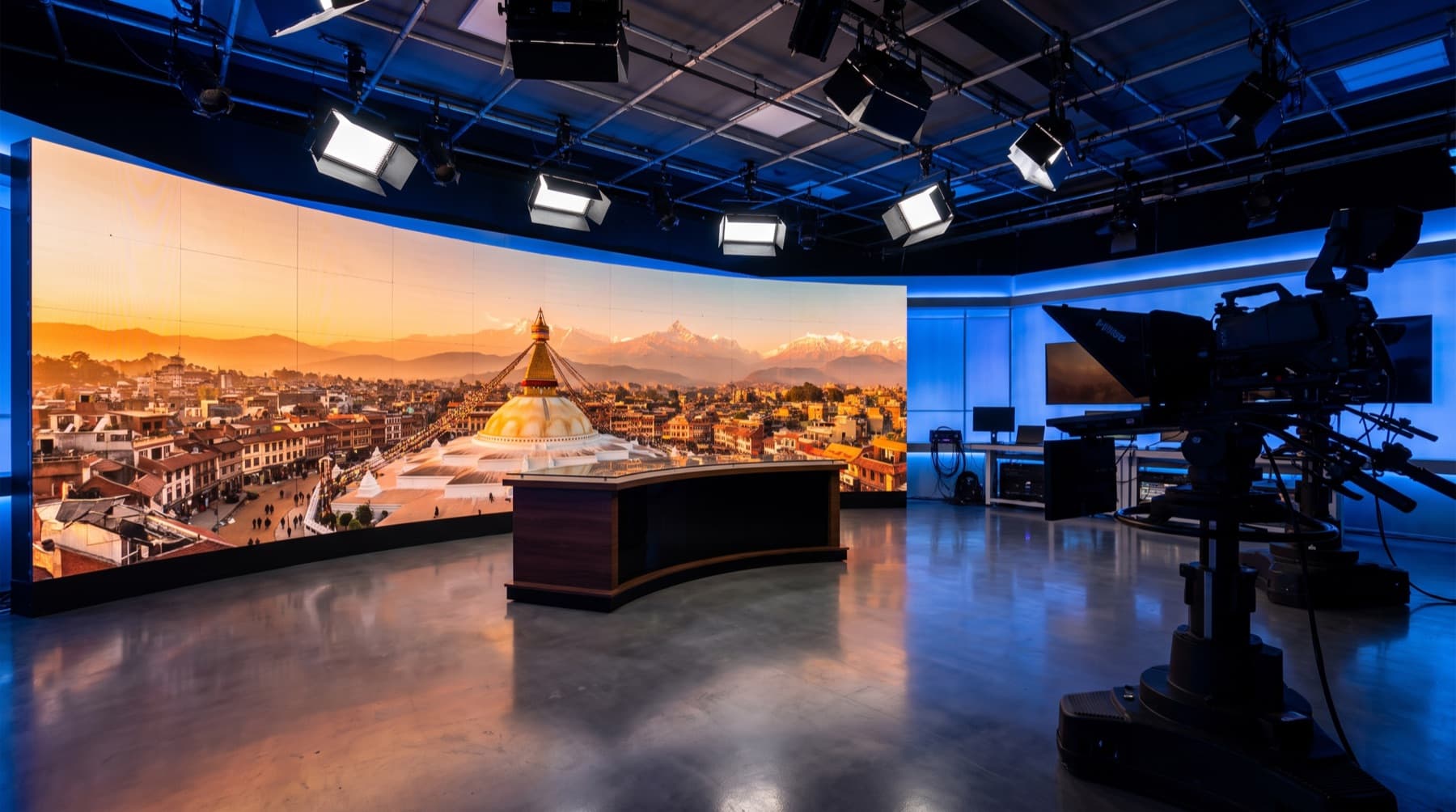
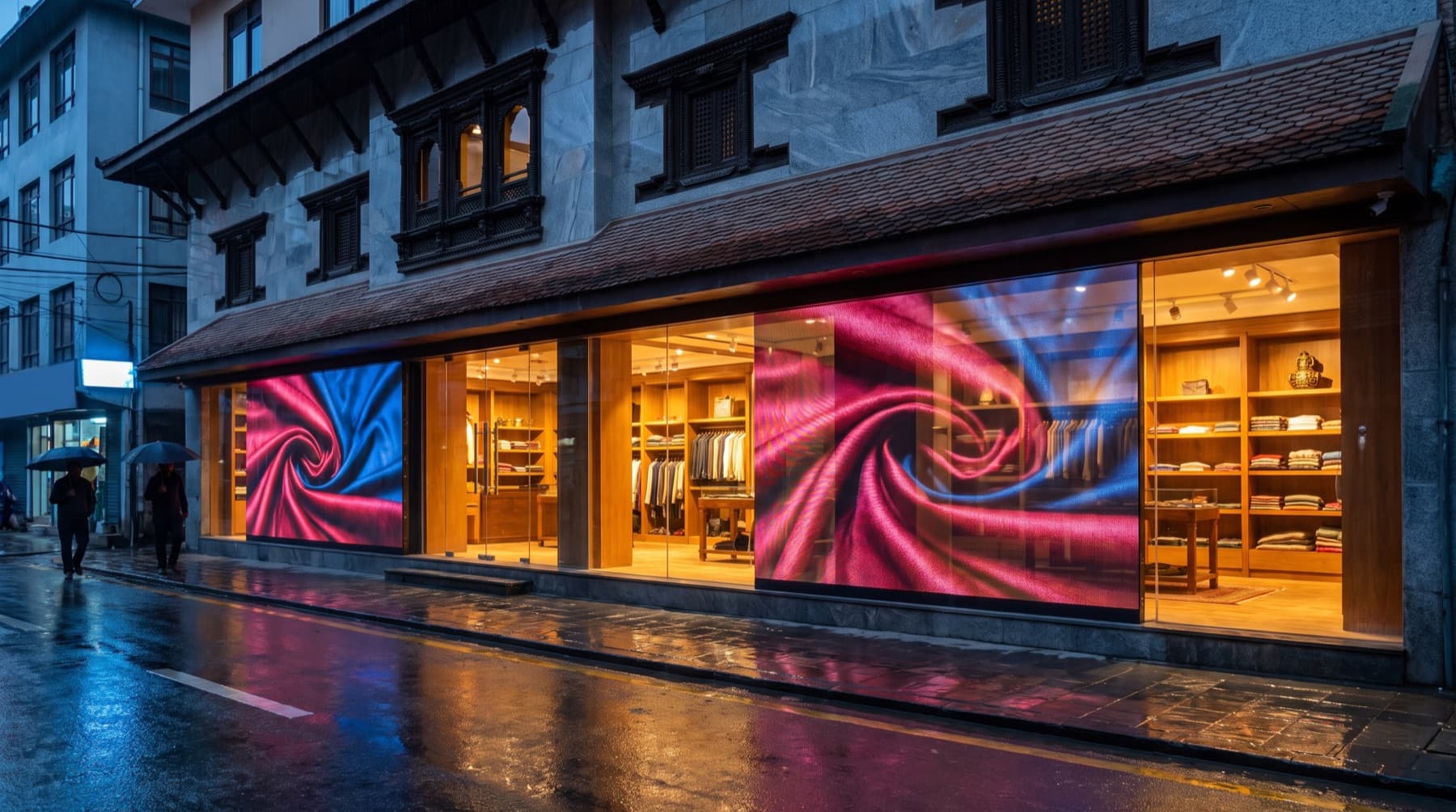
Solutions by application
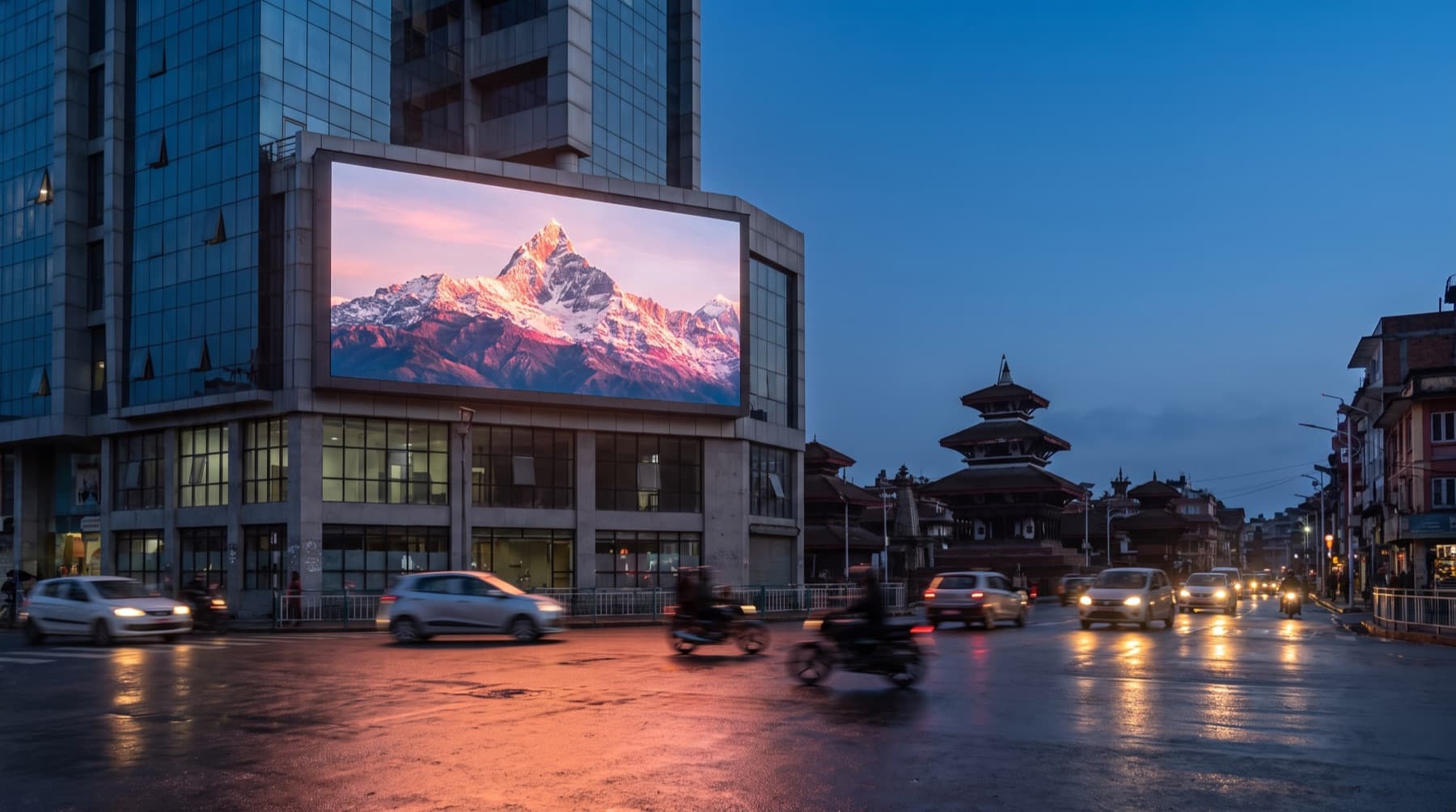
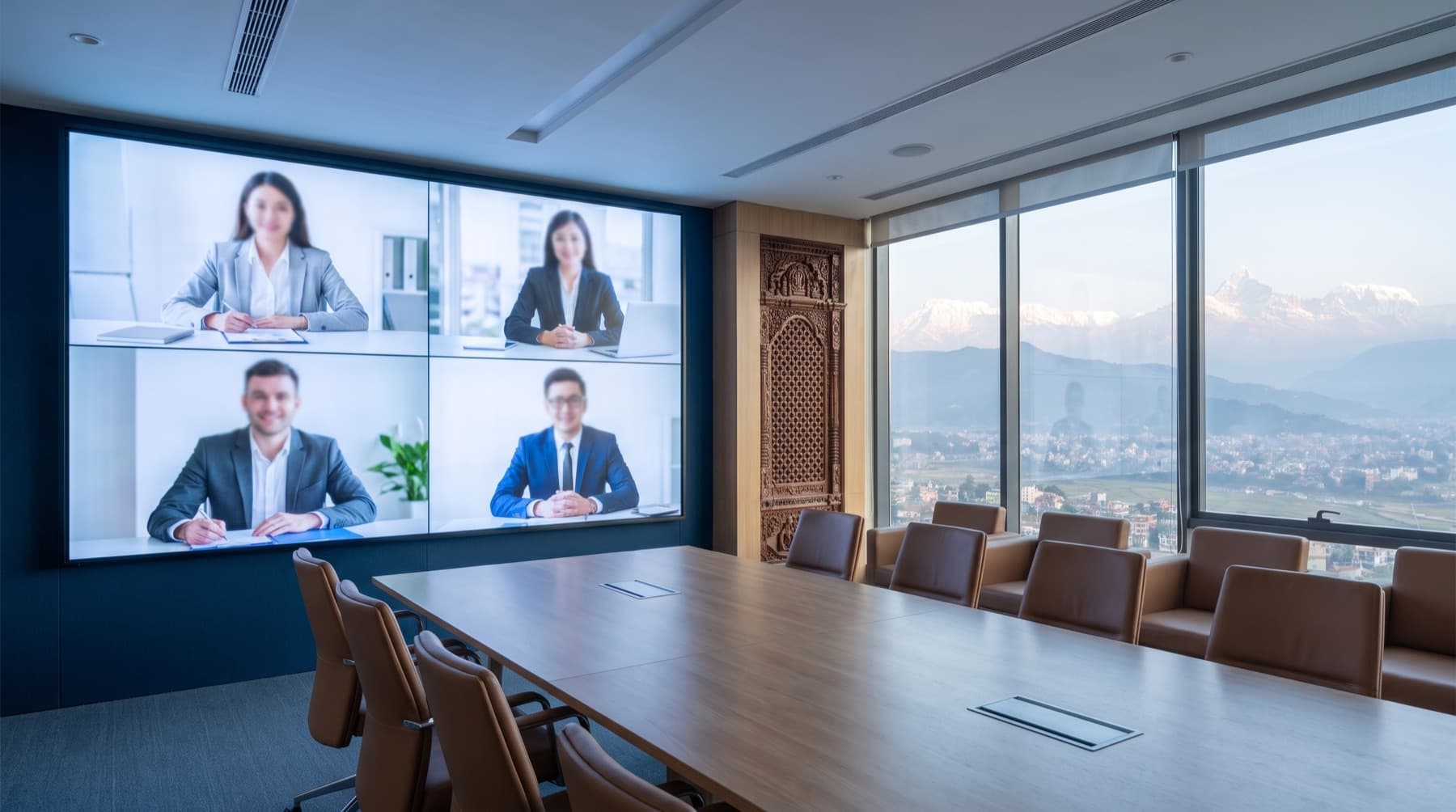
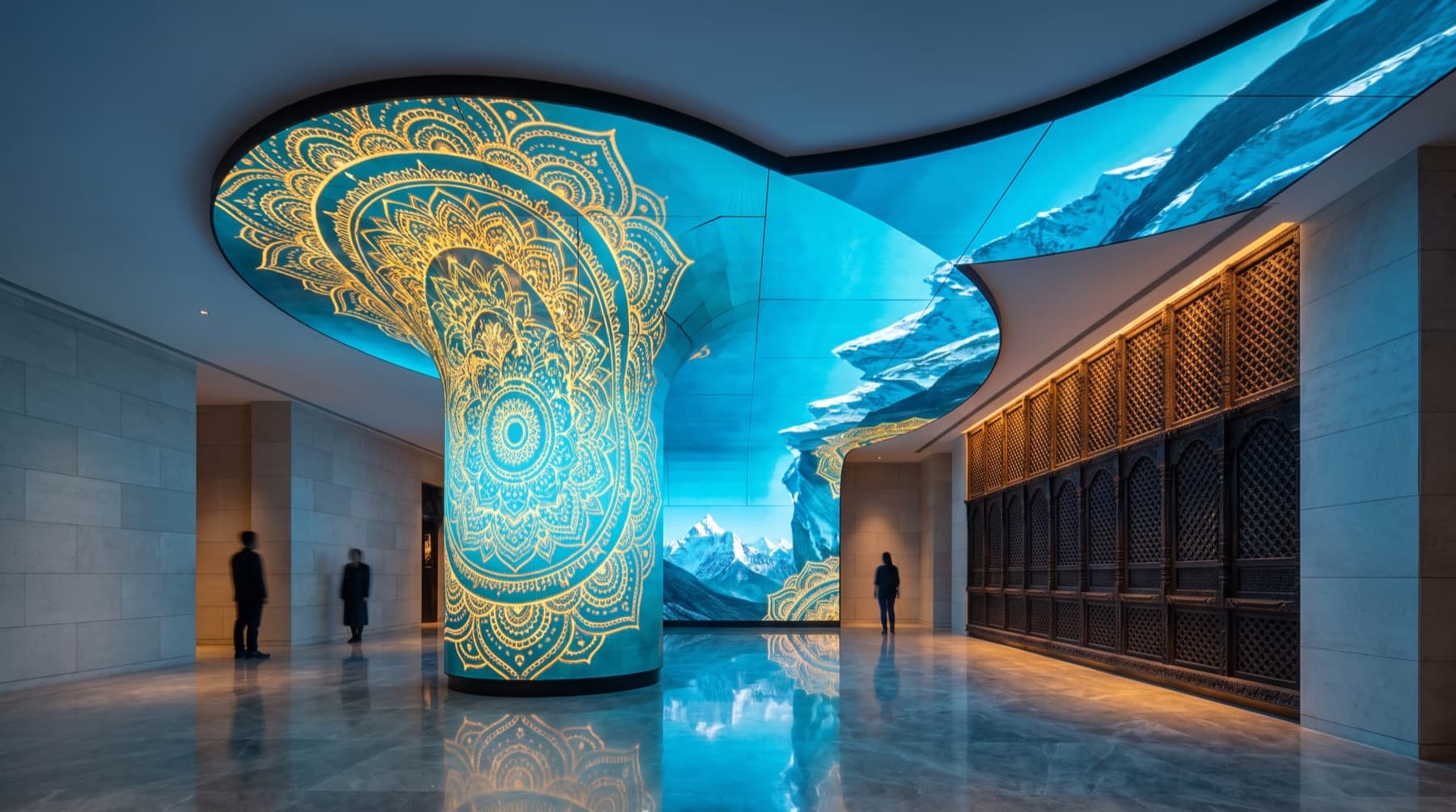
Every LED project is really a question about a room. How far away people stand sets the pixel pitch; how much daylight reaches the screen sets the brightness; whether a camera ever films it makes refresh rate a hard requirement rather than a nicety. Each page below starts from those constraints for one kind of space, then works out to the wall, the signal chain and the structure around it.
Start from the room, not the panel
The single most expensive mistake in LED is specifying a screen for the wrong distance or the wrong light. Both are decided before anyone looks at a model number, and neither can be corrected after installation.
A display is a system
Panels are the easy part. Processing, sending and receiving cards, redundancy, cabling, structure and commissioning are what decide whether it works on day one and still works in year three. Every page here prices the system, not the panels.
Specified for Nepal
Monsoon rain reaches the back of an outdoor cabinet as readily as the front, and the dry season fills everything with dust. What fails here is usually corrosion at the connectors, not the diodes — which is why sealing and service access matter as much as the specification sheet.
Not sure which of these you are? Tell us the room, the viewing distance and the light, and we will tell you the pitch and the brightness before anyone talks about model numbers — or read the buying guide first.