Guides / Rental, Events & Stage
LED screen rental in Nepal: what to ask before you book
7 min read · Updated October 2026
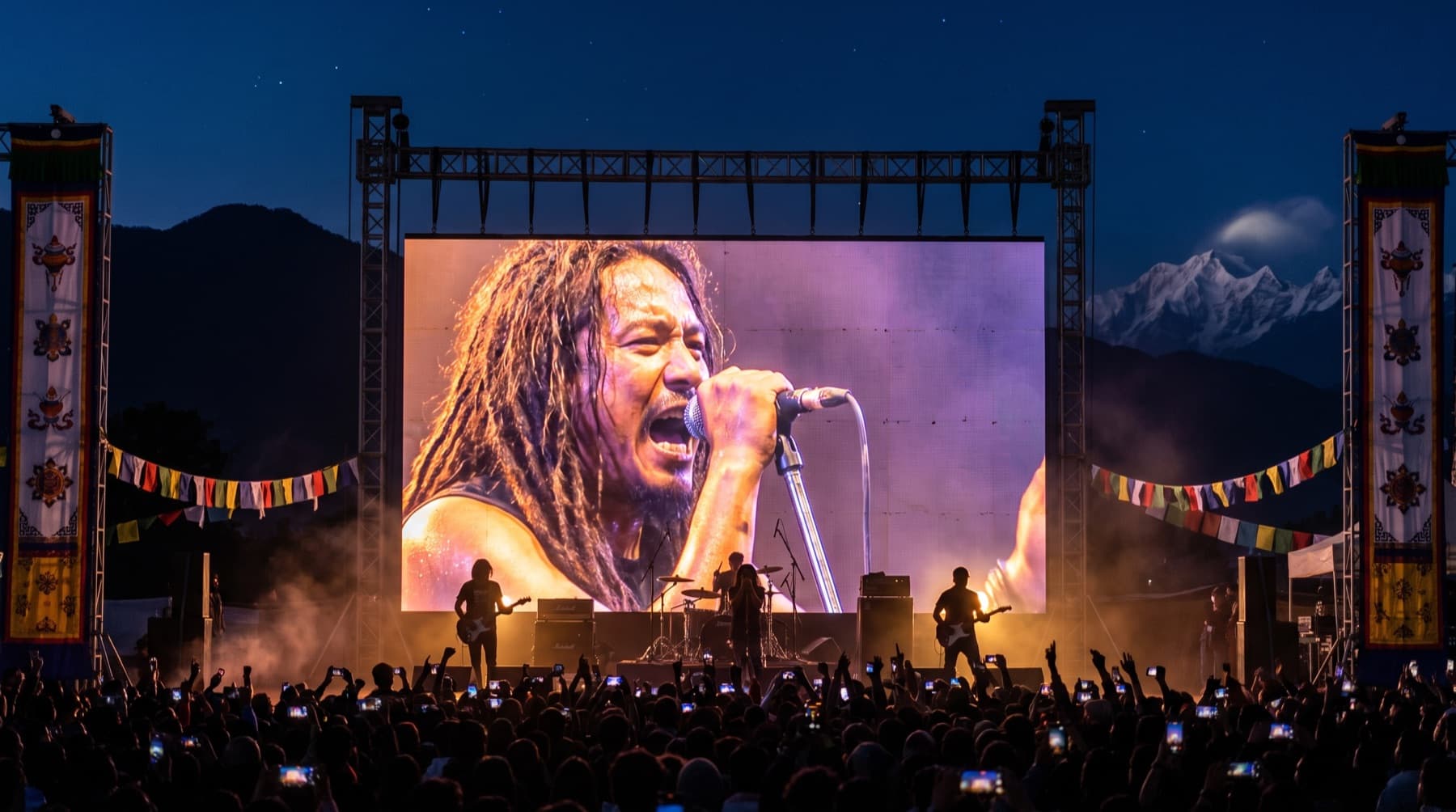
Before you book an LED screen rental in Nepal, confirm the pixel pitch and brightness suit your venue and audience distance, how the screen will be supported, who supplies power and a technician, what backup exists, and exactly what the quote includes. Rental screens fail at events for predictable reasons: the wrong pitch, a weak structure, an overloaded generator, no spare modules or content in the wrong resolution. Asking the right questions in advance removes almost all of them.
What size and pixel pitch do you actually need?
Size the screen to the audience and the venue, then pick the pitch from the distance of the nearest regular viewer. A pitch in millimetres roughly equals the closest comfortable viewing distance in metres, so a ballroom with front-row guests three metres away needs a much finer pitch than a field concert where the nearest fans are ten metres back.
Ask the rental company for the resolution of the screen they propose, in pixels, not only its size. That number tells your content designer what to create, and reveals whether text and slides will be legible.
Bigger is not always better. A screen that overwhelms a small hall, or blocks the stage décor, does more harm than one sized to the room. Our screen size guide helps with proportions.
Is the screen right for indoors or outdoors?
Confirm whether the cabinets are indoor or outdoor rental units, because they differ in brightness and weather sealing. An indoor screen taken outside will look washed out in daylight and is at risk the moment it rains.
Outdoor rental cabinets should be sealed front and rear and bright enough for the time of day of your event; a daytime outdoor event needs far more brightness than an evening one. Ask what happens if it rains during the monsoon: is there a cover plan, and will the crew keep running or switch off?
Indoors, the opposite problem applies: a very bright screen in a dark hall glares and must be dimmed. A good rental technician sets brightness for the room, not the maximum.
How will the screen be supported and installed?
Ask exactly how the screen will stand or hang — ground-stacked on a base frame, mounted on truss, or flown from a rigging point — and who is responsible for its stability. LED walls are heavy, and a poorly supported screen is a genuine safety risk.
Ground-stacked screens need a level, firm base and bracing, especially outdoors where wind loads the large surface. Flown screens need rated rigging points and a crew who know how to use them. In a hotel or banquet hall, check that the venue permits the method proposed and that floors and ceilings can take the load.
Agree the set-up and dismantling time with the venue. Load-in for a medium screen can take several hours, and venues in Kathmandu often run back-to-back bookings in the wedding season.
Who supplies the power and the technician?
Confirm the screen’s power requirement, who provides the supply, and that a trained technician stays on site for the whole event. A screen sharing an overloaded generator with sound and lighting is the most common cause of mid-show failures in Nepal.
Ask the rental company for the maximum power draw and plan a dedicated, stable supply with proper distribution and earthing. Generators should be sized with headroom, and voltage should be checked before switch-on. Mains at many venues fluctuates, and LED power supplies are sensitive to swings.
The technician should handle the processor, inputs and brightness, and be the person who swaps a module or fixes a cable if something goes wrong. A screen delivered and left unattended is not a rental service.
What backup is included?
Ask what spare modules, power supplies, cables and processing the crew will bring, and what happens if the main laptop or input fails. A few spare modules and a spare cable set solve most on-the-night faults in minutes.
For important events, ask for a backup content source — a second laptop or media player ready to switch in — and confirm the processor can switch between inputs cleanly. If the event is being filmed or streamed, ask for a refresh rate suitable for cameras, ideally 3,840 Hz or higher, so the screen does not flicker on video.
Ask about the rental company’s experience with events like yours and request a short demonstration if the stakes are high.
What should the quote include?
A rental quote should list the screen size and pitch, structure, processing, cabling, transport, set-up, technician hours, dismantling and any extra days, so you can compare like with like. Quotes that look cheaper often omit structure, transport outside the valley, or technician time.
Ask for the delivery and set-up schedule, the content format required and a deadline for supplying content. Check what is charged if the event overruns, and who pays for damage caused by the venue or guests.
If you rent often, compare the total with buying. Our guide to buying versus renting LED screens sets out when ownership starts to make sense.
How should you prepare your content?
Create content at the screen’s exact resolution and aspect ratio, test it on the screen before guests arrive, and bring it in more than one copy. Most visible event problems — stretched logos, black bars, unreadable text — come from content made for a different screen.
Send content to the technician a day ahead where possible, and run through every slide, video and live feed during set-up. For live camera feeds, agree who operates the switcher. We work with event organisers and rental companies across Nepal; if you would like a second opinion on a rental specification, ask us.
The short version
- Pick pitch from the nearest viewer’s distance, and ask for the screen’s pixel resolution.
- Use outdoor rental cabinets outdoors, sealed front and rear, with a rain plan.
- Confirm how the screen is supported, who is responsible for stability and whether the venue permits it.
- Plan a dedicated, stable power supply and keep a trained technician on site throughout.
- Ask for spare modules, a backup content source and a camera-safe refresh rate if filming.
- Compare quotes by inclusions: structure, transport, set-up, technician hours and extra days.
Common questions
What should I ask before renting an LED screen in Nepal?
Ask about pixel pitch and resolution, indoor or outdoor rating, brightness, how the screen will be supported, power requirements, whether a technician stays on site, what spares and backup are included, and exactly what the quote covers. These answers prevent most event-day problems.
Which pixel pitch should I rent for an event?
Choose a pitch in millimetres roughly equal to the nearest viewer’s distance in metres. Ballrooms and conferences with close audiences need finer pitches; outdoor concerts with distant crowds can use coarser ones.
Can a rental LED screen be used outdoors during the monsoon?
Only outdoor-rated rental cabinets sealed front and rear should be used outdoors, and you still need a rain plan. Ask the rental company how they protect the processor, cabling and power distribution, and when they would switch off for safety.
Does an LED screen rental include a technician?
It should. A trained technician on site for the whole event handles the processor, inputs and brightness, and fixes faults quickly. Confirm this in the quote, including hours and any overtime charges.
Why do rental LED screens go off during events?
The most common causes are an overloaded or unstable generator shared with sound and lighting, a failed cable or input, and content or laptops failing. A dedicated power supply, spare cables and modules, and a backup content source prevent most failures.
Is it better to rent or buy an LED screen?
Renting suits occasional events and lets you match the screen to each venue. If you need a screen many times a year, or permanently in one place, buying can work out better. Compare the total cost over a few years rather than one event.
Where to go next
More in Rental, Events & Stage
Want this applied to your site?
We survey the site free, then spec the pitch, brightness and structure around what it actually needs.
Book a site survey