Guides / Industry Guides
LED displays for shopping malls in Nepal
6 min read · Updated October 2026
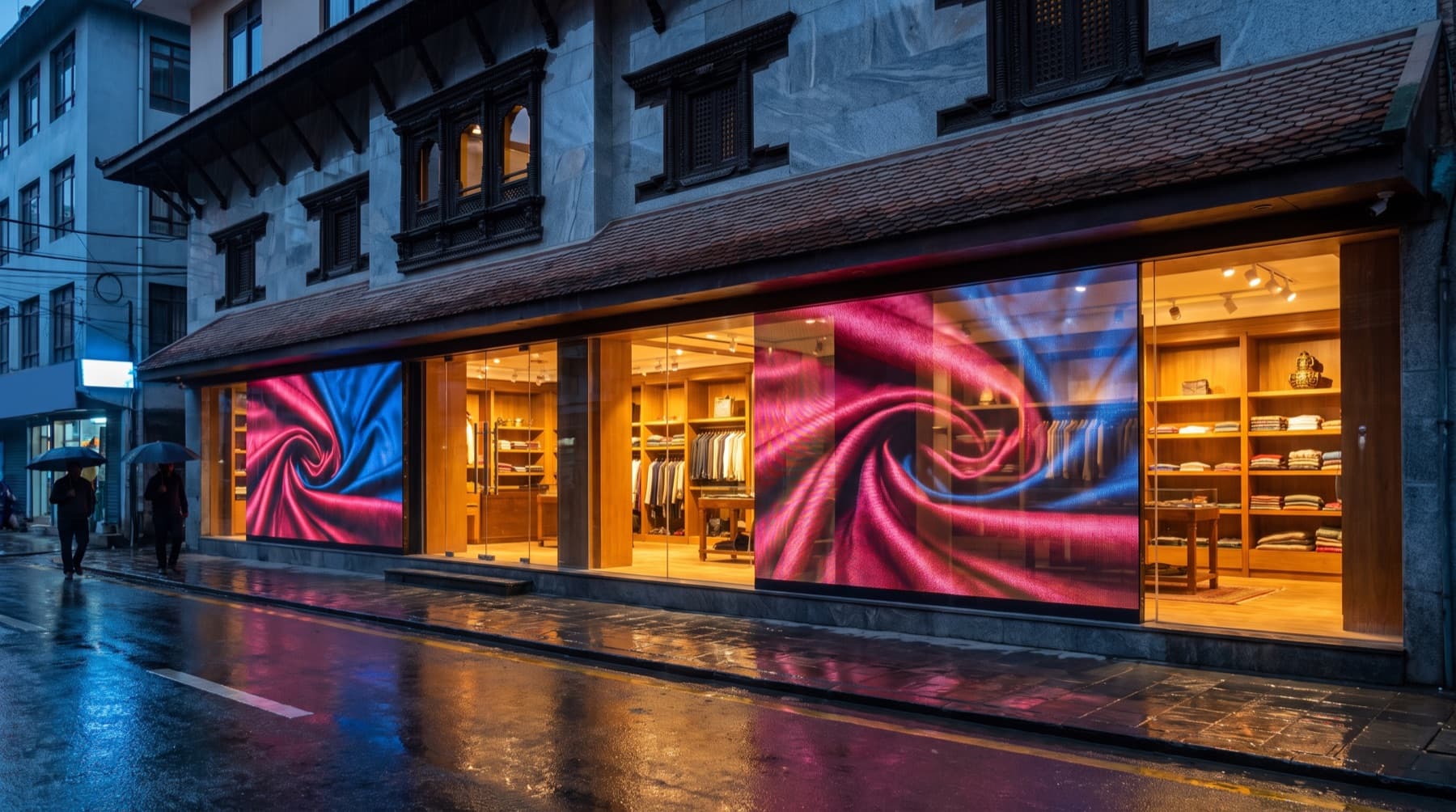
A shopping mall in Nepal typically benefits from four kinds of display: a large LED feature wall in the atrium, an outdoor LED facade screen facing the road, a network of smaller screens for tenant advertising and promotions, and wayfinding or directory screens. The atrium wall and the facade screen can carry paid advertising as well as the mall’s own events, so they are often the screens that pay for the rest. Plan them as one system — shared content, shared control and shared support — rather than as separate purchases.
Where should a mall put its LED screens?
Put the largest screens where the most people look for the longest time: the atrium and the facade. Everything else follows from foot traffic.
The atrium is where shoppers pause, look up and gather for events, so a feature wall there has a captive audience. The facade faces the road and reaches people who have not yet decided to come in. Escalator landings, lift lobbies and food courts are good places for smaller promotional screens, and entrances and junctions are where wayfinding directories belong.
Walk the mall at busy times before deciding. Where people slow down, queue or wait for friends is where a screen is seen; a screen on a wall people hurry past is wasted.
What specification suits a mall atrium wall?
A mall atrium wall usually needs a fine-to-mid indoor pitch, brightness high enough to compete with skylights, and a structure designed with the building’s engineers. Atriums are often brighter than they look.
Viewers see an atrium wall from several floors and many distances, so choose the pitch for the nearest regular viewing point — usually the ground-floor concourse or the first gallery. Daylight through glazing can push requirements towards the top of the indoor brightness range of around 1,200 nits, with dimming in the evening.
Atrium walls are often suspended or fixed high on structural cores. That mounting must be engineered for earthquake loads and agreed with the mall’s structural engineer, and it must allow safe service access for years to come.
How should a facade screen be planned?
A mall facade screen is an outdoor DOOH billboard and should be planned like one: viewing distance from the road, 5,000 nits or more, IP65 sealing front and rear, and an engineered structure. It is often the largest single screen a mall installs.
The pitch follows the road. A facade read from across a wide road can use a coarser outdoor pitch; one read from the pavement in front needs a finer one. Large facade and building-wrap screens are well established in Kathmandu — the STR Advertising building wrap, for example, is a curved Unilumin P10 of around 160 m².
Requirements for outdoor advertising screens vary by municipality and change, so check with the municipality or ward office early. Plan night dimming too, because a facade bright enough for daytime will dazzle drivers and neighbours after dark.
Can a mall sell advertising on its screens?
Yes — many malls sell time on their atrium and facade screens to tenants and outside brands, which can offset the cost of the screens. Treat it as a small media business and plan it from the start.
That means a CMS with scheduling, playlists and proof-of-play reports, so advertisers can see that their slots ran. It also means a rate card, booking process and content rules agreed by mall management. We do not quote advertising revenue figures, because they depend entirely on location, footfall and sales effort.
Our guide to starting a DOOH advertising business covers the commercial side in more depth. On the technical side, the key is a content system that can handle many advertisers without someone manually swapping files every morning.
How should wayfinding and directory screens work?
Wayfinding screens should show a clear map and store directory with a “you are here” marker, updated from the same CMS that runs the rest of the mall. Out-of-date directories frustrate shoppers and tenants alike.
Touch directories at entrances and lift lobbies let shoppers search for a store, while non-touch screens at junctions show a simple floor map. These are close-range screens and are usually best as LCD signage or interactive kiosks rather than LED.
Make updating the directory a routine part of tenant changes. When a shop opens or closes, the mall’s team should be able to update every directory in minutes.
How do events and festival seasons change the plan?
Plan the atrium wall as an event stage as well as an advertising screen, because Dashain, Tihar, New Year and brand launches are when the mall is busiest. A wall that can take a live camera, a laptop and a presenter turns the atrium into a venue.
That means extra inputs at the stage, a processor that can switch quickly, and a refresh rate of 3,840 Hz or higher so events filmed by visitors and press look clean. For one-off larger events, rental LED can extend the permanent wall.
Power and safety need planning for crowds: protected supply with surge protection, cables enclosed away from walkways, and coordination with the mall’s fire and evacuation plans. A free site survey is the right starting point for any mall project.
The short version
- Put the largest screens in the atrium and on the facade, where attention is longest.
- Atrium walls must be engineered with the building’s structural engineer for earthquake loads.
- Facade screens are outdoor DOOH: 5,000+ nits and IP65 front and rear.
- Selling screen time needs a CMS with scheduling and proof-of-play reports.
- Directories and wayfinding are usually LCD or kiosks, not LED.
- Plan the atrium wall as an event stage for festival seasons.
Common questions
What size LED screen does a mall atrium need?
It depends on the atrium’s height, the viewing positions and the architecture. Size and pitch should suit the nearest regular viewing point, usually the ground-floor concourse, and the mounting must be engineered with the building’s structural engineer. A site survey settles both.
Can a shopping mall in Nepal earn money from its LED screens?
Many malls sell advertising time on atrium and facade screens to tenants and outside brands. Earnings depend on location, footfall and sales effort, and the mall needs a CMS with scheduling and proof-of-play reporting to run it properly.
Does a mall facade LED screen need approval?
Requirements for outdoor advertising screens vary by municipality and change over time. Check with the municipality or ward office early, before committing to the design.
Which screens are best for mall directories?
Directories and wayfinding are read from close range, so LCD signage or interactive touch kiosks are usually best. They should be updated from the same CMS that runs the rest of the mall’s screens.
How bright should a mall atrium LED wall be?
Atriums with skylights or glazing can need brightness towards the top of the indoor range, around 1,200 nits, with dimming in the evening. A dim interior atrium can run much lower.
Can a mall LED wall be used for live events?
Yes, if it is planned for it with extra inputs at the stage, a capable processor and a refresh rate of 3,840 Hz or higher for clean camera footage. Rental LED can extend it for larger one-off events.
Where to go next
More in Industry Guides
Want this applied to your site?
We survey the site free, then spec the pitch, brightness and structure around what it actually needs.
Book a site survey