Guides / Industry Guides
LED displays for cooperatives and microfinance offices
6 min read · Updated October 2026
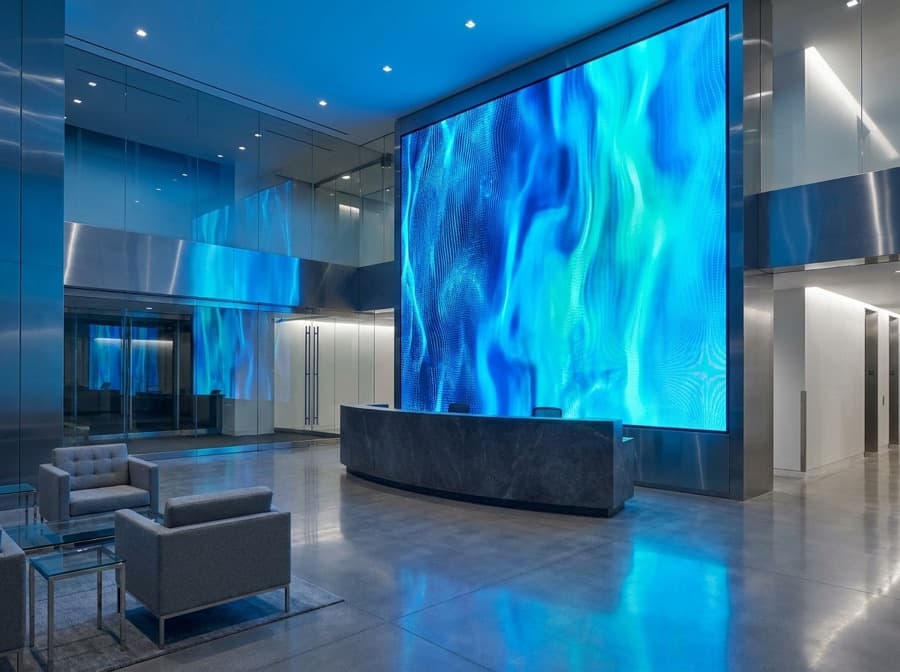
Most cooperatives and microfinance offices in Nepal need one modest screen that shows interest rates, notices and meeting dates clearly, plus a way to show presentations at the annual general assembly. For the office, a small indoor LED board or an LCD signage screen is usually enough; for an outdoor sign above the office, a compact outdoor LED with IP65 sealing front and rear works well. The best choice is the one staff can update in two minutes and that survives power cuts, not the largest screen the budget allows.
What does a cooperative or microfinance office actually need on screen?
A cooperative’s screen mainly needs to show savings and loan rates, notices to members, meeting and AGM dates, and occasional announcements. It is an information board first and an advertisement second.
Members visit often and read the board while they wait at the counter, so text legibility matters more than video. Many offices also want a sign facing the street that shows the organisation’s name and a scrolling message, so that passers-by know the office is there and open.
Separate those two needs. The indoor board is about clear information for members; the outdoor sign is about visibility. They often call for different technology.
Which type of display suits a small cooperative office?
For indoor rate and notice boards, a single LCD signage screen or a small indoor LED board is usually the right size and budget. Members read from a few metres away, which LCD handles easily.
LCD signage is sharp at close range and simple to mount on a wall near the counter. Our Evolve Signage LCD range carries a one-year warranty. An all-in-one indoor LED display is an alternative where you want a larger, brighter board visible across the banking hall; LED displays carry a two-year manufacturer warranty honoured locally.
For the street sign, a single-colour or simple full-colour outdoor LED is common. It needs outdoor brightness and IP65 sealing front and rear, because a sign that fails in its first monsoon is the most expensive kind.
How should rate boards be updated so they stay accurate?
Rate boards should be updated by one named person, from one approved rate sheet, using a fixed template. Accuracy is the whole point of the board.
A simple CMS or a scheduled USB update both work for a single office; for a cooperative with several branches, a cloud CMS that publishes the same template everywhere avoids one branch showing an old rate. Keep the template plain: product name, rate and effective date, in Nepali and English if members need both.
What a cooperative must display, and how, is set by its regulator and its own board, and requirements change. Confirm the current requirements before designing the template rather than copying another office’s board.
What about the annual general assembly and member meetings?
For an annual general assembly, renting an LED screen for the day is usually more sensible than owning one. Most cooperatives hold large meetings only a few times a year.
A rental indoor LED screen, set up in a hall or a party palace, gives every member a clear view of the accounts, the agenda and the voting results, which is difficult with a projector in daylight. Ask the rental provider to include setup, a laptop input and an operator, so the committee can focus on the meeting.
If the cooperative owns its own hall and uses it monthly for trainings and meetings, a modest fixed indoor wall can start to make sense. Count the number of events per year before deciding.
How do power cuts and voltage swings affect a small display?
Every office display in Nepal should run through surge protection and, ideally, a small UPS, because voltage swings damage power supplies more often than anything else. This is especially true in the Terai and in hill towns with weaker supply.
A small indoor LCD screen or LED board draws little power, so a modest UPS can keep it running through short cuts and protect it from spikes when supply returns. Outdoor signs need a proper earth and surge protection on the incoming supply, and the electrical work should be done to a professional standard.
Set the screens to switch on and off with office hours. That reduces power use, extends the life of the display and avoids a sign glowing all night above a closed office.
How should a cooperative budget and buy a display?
Budget for the complete job — screen, mounting, power protection, installation and a little training for staff — and compare quotes on what they include. A low price for panels alone is not a working board.
Ask each supplier who will fix the screen if it fails, how quickly, and whether spares are held in Nepal. For offices outside the valley, ask whether the supplier actually travels to your district or relies on someone else. Our own team installs every display, and we hold spares in Kathmandu.
For guidance on cost drivers, see our LED display price guide, and our warranty guide explains what a good warranty should cover.
The short version
- Most cooperatives need one clear indoor rate and notice board, not a large video wall.
- LCD signage or a small indoor LED board suits members reading from a few metres.
- Street-facing signs need outdoor brightness and IP65 sealing front and rear.
- Publish rates from one approved sheet using a fixed template.
- Rent an LED screen for the annual general assembly unless the hall is used monthly.
- Protect every display with surge protection and, ideally, a small UPS.
Common questions
What is the best display board for a cooperative office in Nepal?
For indoor rate and notice boards, an LCD signage screen or a small indoor LED board is usually best, because members read it from a few metres away. For a street-facing sign, choose outdoor LED with IP65 sealing front and rear.
Can a cooperative show interest rates on a digital display?
Yes. Use a fixed template updated from one approved rate sheet by a named person, so the board is always accurate. Confirm the current display requirements with your regulator and board before designing it.
Should a cooperative buy or rent an LED screen for its AGM?
Most cooperatives should rent for the AGM, because large meetings happen only a few times a year. Rental with setup and an operator gives a clear view of accounts and agendas without the cost of ownership.
Does a small office display need a UPS in Nepal?
It is strongly advisable. A small UPS with surge protection keeps the screen running through short cuts and protects its power supply from voltage spikes, which are a common cause of failures.
Can several cooperative branches share one content system?
Yes. A cloud CMS can publish the same rate board and notices to every branch at once, which prevents one branch showing outdated information.
What warranty do LED and LCD displays carry?
Our LED displays carry a two-year manufacturer warranty honoured locally with spares held in Kathmandu. Our Evolve Signage LCD screens carry a one-year warranty.
Where to go next
More in Industry Guides
Want this applied to your site?
We survey the site free, then spec the pitch, brightness and structure around what it actually needs.
Book a site survey