Guides / Installation, Power & Maintenance
LED wall mounting options: wall, floor stand, hanging and recessed
6 min read · Updated November 2026
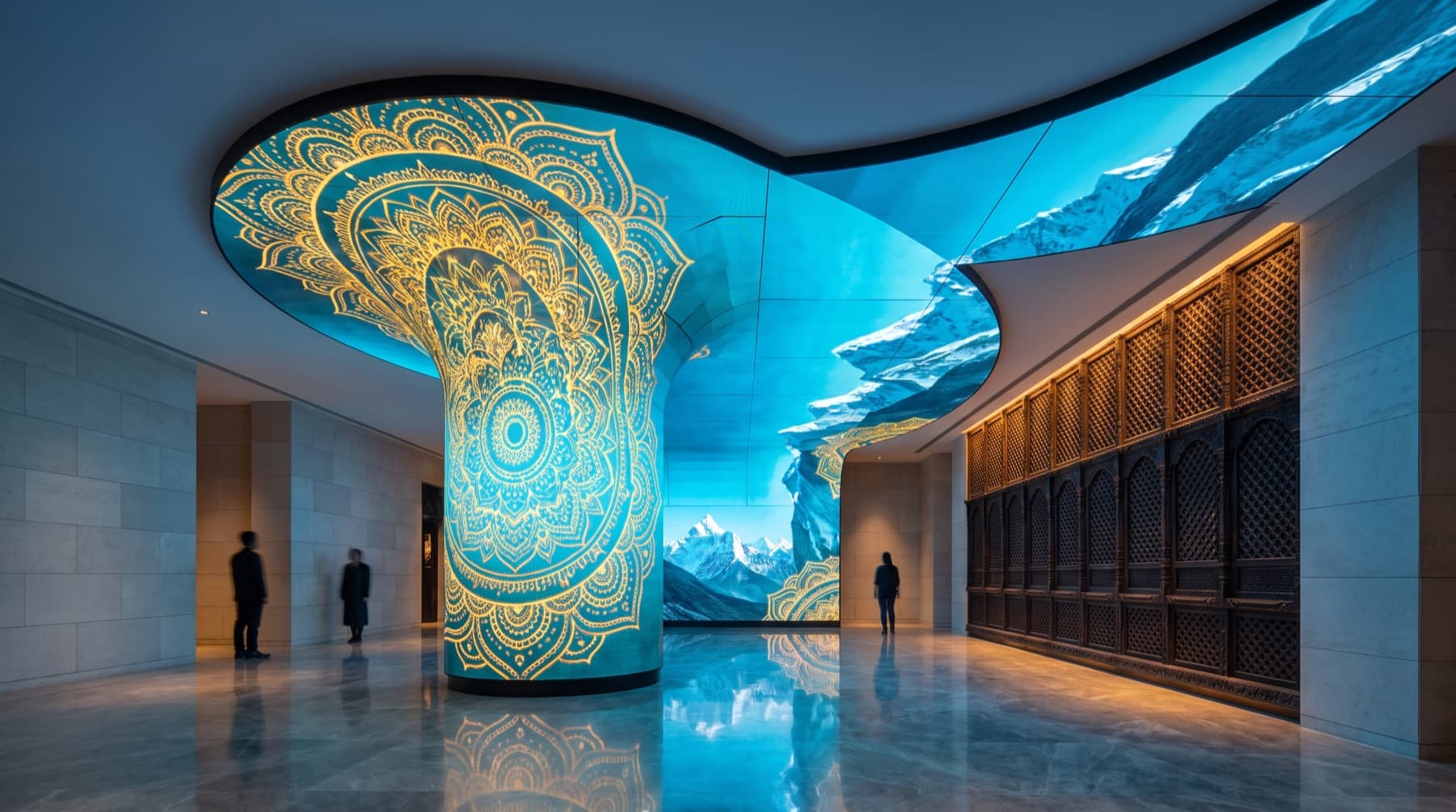
An LED wall can be mounted in four main ways: fixed to a wall on a steel frame, standing on its own floor structure, hanging from the ceiling or a truss, or recessed flush into a niche. The right choice depends on what the building can carry, how the screen will be serviced, how it will shed heat, and how it should look. In Nepal, earthquake restraint should be part of every mounting decision, whichever method you choose.
What is the most common way to mount an LED wall?
The most common mounting is a steel frame fixed to a solid wall, with the LED cabinets locked onto the frame. It is simple, takes little floor space, and suits most lobbies, boardrooms, shops and classrooms.
The key question is whether the wall can carry the load. Reinforced concrete and solid brick usually can, with the right anchors; hollow block, partition walls and glazed façades usually cannot, and the frame must then bear on the floor or the structure instead. The frame also sets the screen’s flatness, so it is levelled carefully before any cabinet goes on.
Wall-mounted screens are normally front-service, so modules can be removed from the face without needing space behind. That allows the screen to sit close to the wall — though not tight against it, because the cabinets still need a ventilation gap.
When should an LED wall be floor-standing?
A floor-standing mount is right when the wall cannot carry the screen, when there is no wall at all, or when the screen needs to be movable. The cabinets sit on a ground-support frame or base that carries the weight down to the floor, with bracing to keep it stable.
Floor stands suit glass-fronted showrooms, open-plan offices, exhibition halls, temporary installations and screens that act as room dividers. All-in-one LED displays on rolling stands are a variation for meeting rooms and training spaces that need a large screen without building work.
A freestanding screen must be restrained against tipping. It needs a wide, heavy base or a tie-back to the building, and in Nepal it should be designed with earthquake shaking in mind — a tall, narrow floor-standing wall is the mount most at risk in a tremor if it is not restrained.
When is a hanging or suspended mount used?
A hanging mount suspends the LED wall from the ceiling structure or a truss, and is used when the floor and walls must stay clear or the screen needs to float in a space. Atriums, auditoriums, stages, sports halls and retail voids are typical.
The ceiling or roof structure must be checked for the load, including the dynamic loads of installation and any movement. Hanging rigs use rated hanging bars, shackles and secondary safety cables so the screen remains secure if a primary fixing fails. Double-sided hanging displays in shops and transit spaces use the same principle.
Service access is the challenge with hanging screens. Plan how a technician will reach the modules — a scissor lift, a catwalk, or a motorised hoist that lowers the screen — before the design is fixed.
What is a recessed or flush-mounted LED wall?
A recessed mount sets the LED wall into a niche so its face sits flush with the surrounding wall surface, giving a built-in architectural finish. It is popular in corporate reception areas, boardrooms and high-end retail.
Recessing requires front-service cabinets, because there is no access behind the screen once it is built in. The niche must be dimensioned to whole cabinets plus small tolerances, so it is designed with the LED supplier, not before. Ventilation is the other critical detail: a sealed niche traps heat, so it needs a gap behind the cabinets and a path for warm air to escape, sometimes with quiet extraction fans.
Because the finish is unforgiving, recessed walls need the most careful frame alignment. Small errors in the niche or frame show as uneven gaps at the trim.
What about outdoor, curved and creative mounting?
Outdoor screens are usually mounted on a building façade, a rooftop frame or a dedicated pole or column structure, and each needs steel engineered for wind load, corrosion protection and drainage. The structure is often a substantial part of an outdoor project and needs design from the start.
Curved and shaped walls use cabinets or frames designed to hold specific angles, mounted on a correspondingly shaped frame. A curved hotel lobby wall we installed in Thamel, a P2.5 indoor screen about 6×2.5 m, shows how a curve can follow the architecture rather than fight it. Corners, columns and ceilings use similar principles with flexible or angled modules.
Whatever the shape, the frame must hold the cabinets at precisely the designed angles. Errors in a curved frame create visible seams and steps that calibration cannot hide.
How do you choose the right mounting option?
Choose the mounting by working through four questions in order: what the building can carry, how the screen will be serviced, how it will stay cool, and how it must look. The first two usually decide the answer before aesthetics come in.
Start with the structure — the wall, floor or ceiling that will carry the weight. Then decide front or rear service, which sets how much depth is needed. Allow for ventilation, especially in niches. Finally consider the finish: flush, framed, freestanding or floating. Throughout, include earthquake restraint suitable for Nepal — secure anchors, bracing and secondary safety fixings.
A site survey settles most of these questions quickly. If you know the size you want, our wall sizer helps you see cabinet layouts; for the mounting itself, ask us to look at the wall.
The short version
- The four main mounts are wall-fixed frame, floor-standing, hanging and recessed.
- Check what the wall, floor or ceiling can carry before choosing a mount.
- Recessed and close-to-wall installations need front-service cabinets and a ventilation path.
- Hanging screens need rated rigging, safety cables and a planned way to service them.
- Outdoor, curved and shaped walls need frames engineered for their loads and angles.
- In Nepal every mount should include earthquake restraint.
Common questions
Can an LED video wall be mounted on a plasterboard or partition wall?
Usually not directly. Partition walls and hollow blocks rarely carry the weight safely, so the frame is designed to bear on the floor or on structural members instead, or the screen is built as a floor-standing unit.
What is the difference between front-service and rear-service LED mounting?
Front-service cabinets let technicians remove modules from the screen face, so the screen can sit close to the wall or recessed. Rear-service cabinets need access space behind the screen, which takes more depth but suits large outdoor structures with walkways.
Is it safe to hang an LED screen from the ceiling?
Yes, if the ceiling structure is checked for the load and the screen is hung with rated hardware and secondary safety cables. A plan for reaching the screen for maintenance should be agreed before installation.
Does a recessed LED wall need ventilation?
Yes. LED cabinets produce heat, and a sealed niche traps it. Leave a gap behind the cabinets and a route for warm air to escape, with quiet fans if needed, to protect the screen’s lifespan.
How should LED walls be mounted for earthquake safety in Nepal?
Use secure anchors into the structure, bracing for tall or freestanding screens, and secondary safety fixings so the screen stays restrained during shaking. Freestanding and hanging screens need particular attention.
Where to go next
More in Installation, Power & Maintenance
Want this applied to your site?
We survey the site free, then spec the pitch, brightness and structure around what it actually needs.
Book a site survey