Guides / Outdoor & DOOH Advertising
Selling ad slots on an LED billboard: loops, slots and rate cards
6 min read · Updated November 2026
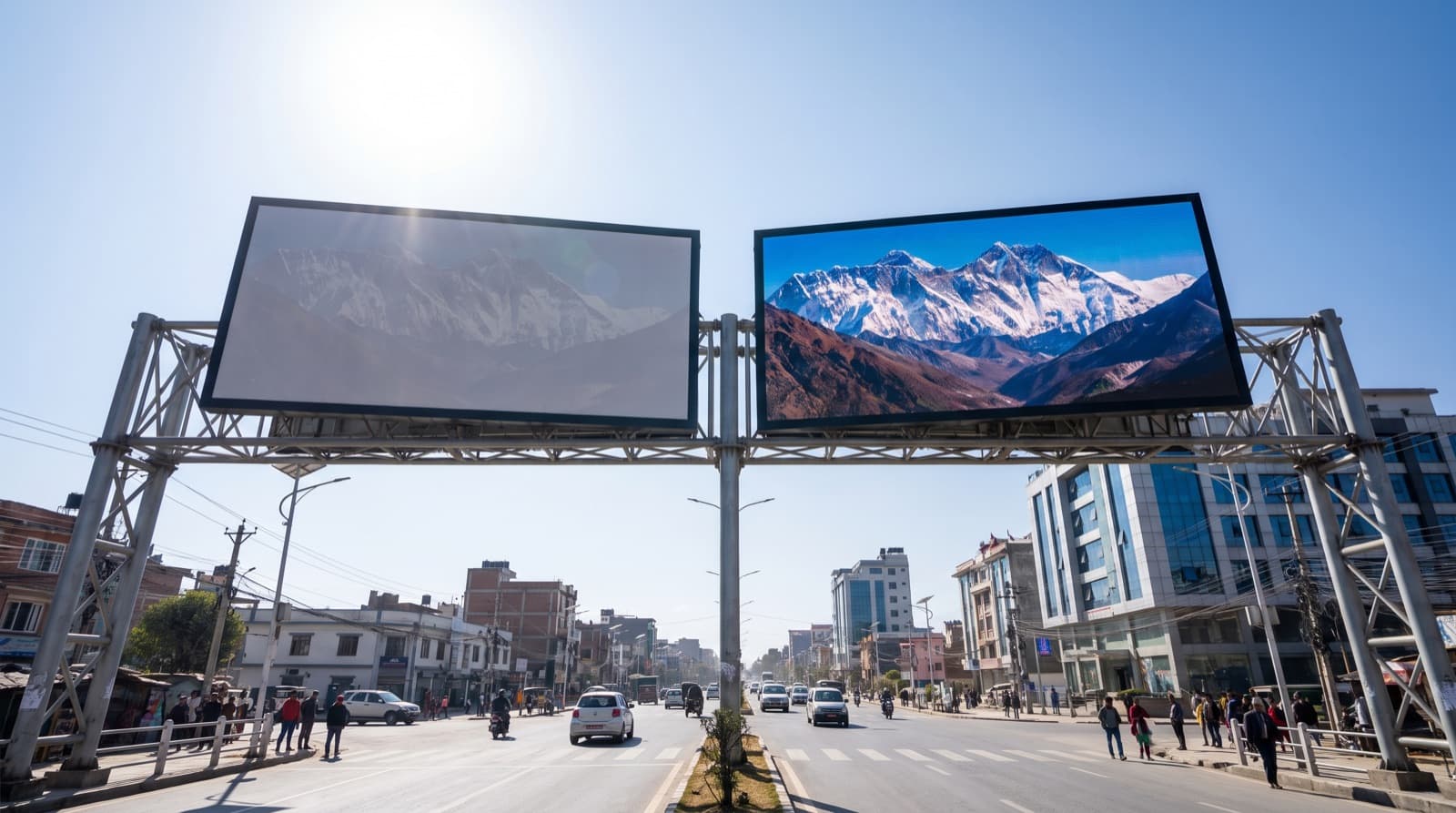
You sell ad slots on an LED billboard by dividing a repeating loop — typically a few minutes long — into fixed slots of around 10–15 seconds, and selling each slot to an advertiser for a period such as a week or a month. What the advertiser buys is a share of voice: the fraction of screen time that is theirs. A clear rate card, consistent loop structure, reliable scheduling and proof of play are what turn a screen into a sellable media product.
What is a loop and what is a slot?
A loop is the full sequence of adverts that plays and then repeats; a slot is one advertiser’s fixed position within it. If the loop is two minutes and each slot is 10 seconds, the loop holds 12 slots and each advertiser appears once every two minutes, all day.
This arithmetic is the foundation of everything you sell. Loop length divided by slot length gives your inventory per screen; operating hours divided by loop length gives how many times each slot plays per day. Keep both fixed and published, so advertisers know exactly what they are buying.
Changing loop structure mid-campaign is the quickest way to lose trust. If you must change it, do so at a clear point and tell advertisers in advance.
How long should loops and slots be?
Choose slot and loop length by how long your audience is in front of the screen. At a junction where people wait a minute or two, a short loop means each advertiser is seen at least once by most people; on a road where people pass quickly, short slots and simple creative matter more than loop length.
Common practice is slots of 10 or 15 seconds and loops of a few minutes. Longer loops create more inventory but dilute each advertiser’s frequency; shorter loops give advertisers more frequency but less inventory to sell. There is no universal right answer — match it to the site and your demand.
Whatever you choose, keep the loop full. An empty slot can carry a house advert for your own sales line, but a visibly empty or repetitive loop tells passers-by and advertisers that the screen is not selling.
What should a DOOH rate card include?
A good rate card states clearly what each package delivers: slot length, loop length, plays per day, operating hours, campaign period and the site details. Advertisers and agencies compare media on these terms, so put them at the top.
Most operators offer a standard package plus variations: longer slots, multiple slots in the same loop for more share of voice, full takeovers for launches, day-parted packages (mornings only, evenings only) and multi-screen bundles if you run a network. Discounts for longer commitments are common.
We do not publish rate figures; pricing is your commercial decision and depends on site, demand and competition. What matters is that the structure is simple, consistent and easy for an agency to put in a media plan.
Who buys DOOH slots in Nepal?
Typical buyers of DOOH slots in Nepal include banks and financial institutions, telecoms and ISPs, colleges and schools, real estate, automobile and motorbike dealers, consumer brands, events and local businesses. Agencies buy for larger brands; local businesses usually buy direct.
Seasonality matters. Demand rises around Dashain and Tihar, New Year, admission periods and major events, and some operators price these periods differently or sell them early.
Local buyers often need help with creative. Offering simple design or adaptation of existing artwork to the screen’s resolution makes it far easier for a small business to say yes.
How do you prove the adverts actually ran?
Proof of play is a record showing when each creative played, and it is what keeps advertisers coming back. A cloud content management system can log every play; combine that with dated photographs or short video clips of the screen running the advert.
Send a short report at the end of each campaign: dates, plays, any downtime and the photos. Advertisers rarely ask for more, and very few smaller operators provide even this, so it is a genuine differentiator.
Do not invent audience figures. If you quote footfall or traffic numbers, they must come from a real count you can explain. A modest, honest count beats an impressive number you cannot defend.
What happens if the screen goes off during a campaign?
If the screen is off or faulty during a paid campaign, the honest practice is to offer a make-good — extra plays or extra days equal to what was lost. State this policy on the rate card so it is expected rather than argued about.
The best make-good is the one you never need. Remote monitoring that alerts you when the screen goes offline, held spare modules, protected power and a maintenance routine keep downtime to a minimum, which protects both revenue and reputation.
Keep a downtime log. It feeds into your make-goods and tells you which problems recur, whether power, connectivity or hardware.
How does the screen setup support selling?
Your control system should make scheduling by slot, date and time simple, and should log playback automatically. If scheduling is clumsy, mistakes follow — the wrong advert in the wrong slot, a campaign that runs a day late.
We set up DOOH screens with cloud CMS scheduling and remote monitoring as standard, and we can walk your team through loop setup at handover. Ask us when you plan your first screen.
The short version
- A loop is the repeating sequence; a slot is one advertiser’s fixed position in it.
- Loop length divided by slot length gives inventory; hours divided by loop length gives daily plays.
- Match slot and loop length to how long people are in front of the screen.
- A clear rate card states slot, loop, plays per day, hours and campaign period.
- Proof of play from CMS logs plus dated photos keeps advertisers coming back.
- Publish a make-good policy for downtime, and monitor to keep it rare.
Common questions
How long is a typical ad slot on a digital billboard?
Slots are commonly 10 or 15 seconds, repeating in a loop of a few minutes. The right length depends on how long viewers are in front of the screen and how simple the creative is.
How many adverts can run on one LED billboard?
It depends on loop and slot length. A two-minute loop with 10-second slots holds 12 slots, so up to 12 advertisers can share the screen at once; a longer loop holds more but each advertiser plays less often.
How do I price ad slots on my LED screen?
Pricing is a commercial decision based on your site, demand, competition and package structure. Build a simple rate card that states slot length, loop length, plays per day, hours and campaign period, so advertisers can compare it with other media.
What is share of voice in DOOH advertising?
Share of voice is the proportion of the screen’s time that one advertiser owns. One 10-second slot in a two-minute loop is one twelfth of screen time; buying two slots in the same loop doubles it.
How can I show advertisers that their ad was displayed?
Use your content management system’s playback logs, which record when each creative played, and add dated photographs or video of the screen. Send a short report at the end of each campaign including any downtime and make-goods.
Where to go next
More in Outdoor & DOOH Advertising
Want this applied to your site?
We survey the site free, then spec the pitch, brightness and structure around what it actually needs.
Book a site survey